
Overview of Shoulder Stability Exercises
Shoulder instability demands a comprehensive approach, utilizing stabilization exercises, strengthening, taping, and activity adjustments to reinforce dynamic stabilizers – resources are often found in shoulder stability exercises pdf guides.
Understanding Shoulder Instability
Shoulder instability arises when the shoulder’s structures – ligaments, tendons, and muscles – fail to adequately control the humerus within the glenoid. This can range from subtle feelings of looseness to complete dislocations. A key component of rehabilitation, often detailed in shoulder stability exercises pdf resources, focuses on restoring the function of dynamic stabilizers.
These stabilizers, including the rotator cuff and scapulothoracic muscles, work together to maintain humeral head centering. Instability can stem from trauma, repetitive overhead motions, or inherent ligamentous laxity. Effective management, as outlined in many exercise programs, prioritizes proprioceptive training, strengthening, and activity modification to bolster these crucial stabilizers and prevent recurrent episodes. Understanding the root cause is vital for a tailored approach.
The Role of Dynamic Stabilizers
Dynamic stabilizers – the rotator cuff and scapulothoracic muscles – are paramount in shoulder function, actively controlling humeral head position during movement. Unlike static structures, these muscles adapt and respond to forces, providing on-demand stability. Many shoulder stability exercises pdf guides emphasize their crucial role.
The rotator cuff (supraspinatus, infraspinatus, teres minor, subscapularis) compresses the humeral head into the glenoid, while the scapulothoracic muscles (trapezius, serratus anterior, rhomboids) control scapular motion, creating a stable base. Proper scapulohumeral rhythm, detailed in rehabilitation protocols, relies on coordinated muscle activation. Strengthening these dynamic stabilizers is central to preventing instability and restoring optimal shoulder mechanics, as detailed in comprehensive exercise programs.
Importance of a Comprehensive Program
A fragmented approach to shoulder rehabilitation often yields limited, temporary results. A truly effective program, often outlined in detailed shoulder stability exercises pdf resources, must address multiple facets of shoulder dysfunction. This includes not only strengthening weakened muscles but also restoring proper scapulothoracic rhythm and proprioception – the body’s awareness of joint position.
Ignoring any component can compromise overall stability. A comprehensive program integrates exercises targeting the rotator cuff, scapular stabilizers, and dynamic control. It also incorporates activity modification and, potentially, taping techniques to support healing and prevent re-injury. Gradual progression and consistent adherence are key to long-term success and sustained shoulder health.

Optimizing Shoulder Function
Optimizing shoulder mechanics requires restoring scapulothoracic rhythm and rotator cuff endurance, often detailed in shoulder stability exercises pdf guides, for efficient movement.
Scapulothoracic Rhythm and Stability
Scapulothoracic rhythm, the coordinated movement between the scapula and humerus, is crucial for optimal shoulder function and stability. Achieving this rhythm relies heavily on the endurance of both the scapulothoracic muscles and the rotator cuff. A disruption in this coordinated motion can lead to impingement, instability, and pain.
Exercises targeting the middle trapezius, rhomboids, and serratus anterior are vital for establishing and maintaining proper scapular positioning on the thorax. Resources like shoulder stability exercises pdf materials often emphasize prone rows for middle trap and rhomboid activation, minimizing lever arm stress. The prone full can exercise effectively engages the supraspinatus, lower trapezius, and posterior deltoid.
Furthermore, preventing scapular winging – a sign of serratus anterior weakness – is paramount. Targeted activation, such as the supine punch, helps strengthen this key muscle, contributing to posterior shoulder stability.

Endurance of Scapulothoracic Muscles
Developing endurance within the scapulothoracic musculature is fundamental for sustained shoulder stability during dynamic activities. This endurance, working in synergy with the rotator cuff, directly impacts the establishment of proper scapulohumeral rhythm. Without sufficient endurance, fatigue sets in, compromising scapular control and increasing vulnerability to injury.
Effective exercises, often detailed in shoulder stability exercises pdf guides, focus on repetitive, low-load movements. The prone row, for instance, builds endurance in the middle trapezius and rhomboids while minimizing strain. Similarly, sustained scapular protraction exercises, like the supine punch, enhance serratus anterior endurance.
Prioritizing endurance alongside strength training ensures the scapular stabilizers can consistently maintain optimal positioning throughout a full range of motion, preventing compensatory patterns and promoting long-term shoulder health.
Rotator Cuff Muscle Function
The rotator cuff muscles – supraspinatus, infraspinatus, teres minor, and subscapularis – are crucial dynamic stabilizers of the glenohumeral joint. Their function extends beyond simply initiating and controlling arm movements; they actively compress the humeral head into the glenoid fossa, enhancing joint stability. Weakness or fatigue within these muscles significantly increases the risk of instability and impingement.
Shoulder stability exercises pdf resources commonly emphasize targeted strengthening of each rotator cuff muscle. Exercises like external and internal rotations, often performed with resistance bands, are foundational. The prone full can exercise specifically targets the supraspinatus, lower trapezius, and posterior deltoid, promoting coordinated activation;

Maintaining optimal rotator cuff function is paramount for preventing dislocations and ensuring smooth, pain-free shoulder movement.

Three-Part Exercise Program
A structured program, often detailed in shoulder stability exercises pdf guides, focuses on preventing dislocation, strengthening the rotator cuff, and enhancing scapular muscle control.
Part I: Preventing Shoulder Dislocation
Initial focus centers on avoiding provocative positions that exacerbate instability, a key component often outlined in shoulder stability exercises pdf resources. This phase prioritizes regaining control and minimizing the risk of re-injury. Exercises to avoid provocation are crucial; movements that historically cause subluxation or dislocation should be modified or temporarily avoided.
Proprioceptive training is then implemented to enhance joint awareness and neuromuscular control. This involves exercises designed to challenge the shoulder’s ability to sense its position in space, improving dynamic stability. These drills help retrain the muscles to react appropriately and prevent unwanted movements, bolstering the shoulder’s natural defenses against dislocation. A well-designed shoulder stability exercises pdf will detail specific proprioceptive drills.
Exercises to Avoid Provocation
Identifying and modifying movements that consistently trigger instability is paramount, often detailed within a shoulder stability exercises pdf guide. Initially, avoid reaching behind the back, especially with external rotation, as this position frequently provokes anterior instability. Similarly, overhead activities involving abduction and external rotation should be approached cautiously or temporarily limited.
Sleeping positions also require attention; avoid sleeping on the affected shoulder. Cross-body stretches can also be problematic. The goal isn’t complete avoidance forever, but rather a phased return, gradually reintroducing these movements as stability improves. A comprehensive shoulder stability exercises pdf will provide specific guidelines for modifying these potentially provocative activities, ensuring a safe and progressive rehabilitation process.
Proprioceptive Training for Stability
Proprioception – the body’s awareness of its position in space – is crucial for shoulder stability, and is often a core component of a shoulder stability exercises pdf program. Exercises should focus on challenging the joint’s ability to sense and react to subtle movements. Examples include closed-chain exercises like wall slides with perturbations, and weight shifts while maintaining shoulder position.
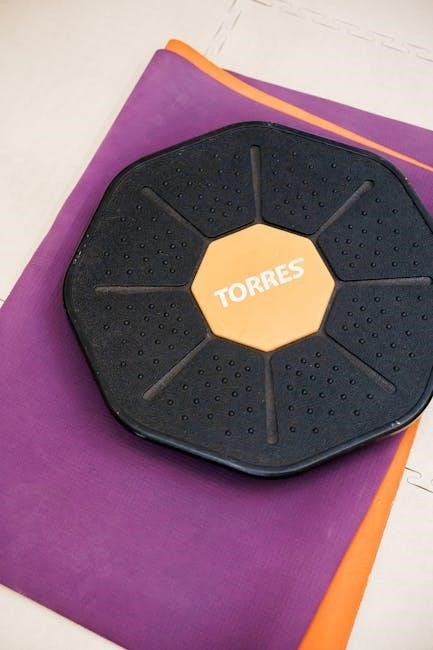
Balance board or foam pad exercises, performed with light resistance, can further enhance proprioceptive input. Perturbations, or small, unexpected forces, applied during exercises, force the neuromuscular system to react and stabilize. A well-designed shoulder stability exercises pdf will outline a progression of proprioceptive drills, starting with simple exercises and gradually increasing the challenge as control improves, ultimately restoring natural joint mechanics.
Part II: Rotator Cuff Strengthening Exercises
Rotator cuff strengthening is paramount for shoulder stability, frequently detailed within a shoulder stability exercises pdf. These muscles – supraspinatus, infraspinatus, teres minor, and subscapularis – control shoulder movement and prevent dislocation. Exercises should target all four muscles, emphasizing controlled movements and proper form.
External rotation with resistance bands, internal rotation using similar bands, and scaption exercises (raising the arm at a 30-45 degree angle) are foundational. A progressive approach, starting with light resistance and increasing gradually, is vital. Many shoulder stability exercises pdf guides recommend 3 sets of 10-15 repetitions for each exercise, focusing on quality over quantity to avoid compensatory movements and ensure effective muscle engagement.
External Rotation Exercises
External rotation exercises are crucial for strengthening the infraspinatus and teres minor, key components of the rotator cuff, often illustrated in a shoulder stability exercises pdf. Typically performed with a resistance band secured to a stable object, the elbow is bent at 90 degrees and held close to the body.
Slowly rotate the forearm outward, maintaining the elbow position, and resisting the band’s pull. Focus on controlled movement, avoiding shrugging or compensating with other muscles. A shoulder stability exercises pdf will often detail starting with light resistance and progressing as strength improves. Aim for 3 sets of 10-15 repetitions, emphasizing proper form to maximize effectiveness and prevent injury. These exercises enhance shoulder stability and prevent anterior instability.
Internal Rotation Exercises
Internal rotation exercises target the subscapularis muscle, another vital rotator cuff component, frequently detailed within a shoulder stability exercises pdf. Similar to external rotations, these are often performed using a resistance band anchored to a stable point. The elbow remains bent at 90 degrees and tucked close to the body.
Slowly rotate the forearm inward, across the body, against the band’s resistance. Maintain proper posture and avoid compensating with shoulder movements. A comprehensive shoulder stability exercises pdf will recommend starting with minimal resistance and gradually increasing it as strength develops. Perform 3 sets of 10-15 repetitions, prioritizing controlled motion. These exercises are essential for balanced rotator cuff strength and overall shoulder stability, counteracting external rotation dominance.
Scaption Exercises
Scaption, a plane between full flexion and abduction, effectively targets the supraspinatus and improves shoulder function, often illustrated in a shoulder stability exercises pdf. Using light dumbbells (1-3 lbs initially), stand with arms at your sides. Raise your arms forward at approximately a 30-45 degree angle from the sagittal plane – this is the scaption plane.
Maintain a slight bend in your elbows and avoid shrugging your shoulders. A detailed shoulder stability exercises pdf will emphasize controlled movement throughout the exercise. Perform 3 sets of 10-15 repetitions, focusing on engaging the shoulder muscles. Scaption minimizes impingement risk compared to traditional abduction, making it suitable for individuals with shoulder issues. It’s a crucial component of a well-rounded shoulder rehabilitation program.
Part III: Scapular Muscle Exercises
Strengthening scapular muscles is vital for shoulder stability, often detailed within a shoulder stability exercises pdf. This phase focuses on the trapezius, rhomboids, and serratus anterior – key dynamic stabilizers. Exercises like prone rows activate the middle trapezius and rhomboids, improving scapular retraction. The prone full can exercise targets the supraspinatus, lower trapezius, and posterior deltoid, enhancing upward rotation.
Crucially, the serratus anterior is activated through exercises like the supine punch, promoting scapular protraction and preventing winging. A comprehensive shoulder stability exercises pdf will outline proper form and progression. These exercises, when performed correctly, establish a strong foundation for shoulder function and reduce the risk of instability or re-injury.
Prone Row for Middle Trap & Rhomboids
The prone row is a foundational exercise for strengthening the middle trapezius and rhomboids, frequently detailed in a shoulder stability exercises pdf. Performing this exercise while prone minimizes the lever arm, maximizing muscle activation. Focus on retracting the scapula – squeezing the shoulder blades together – during the pulling phase. Maintain a neutral spine and avoid excessive lower back extension.
Begin with light weights or resistance bands, gradually increasing the load as strength improves. Proper form is paramount; a shoulder stability exercises pdf will often include visual cues. This exercise directly addresses scapular stability, contributing to optimal shoulder mechanics and reducing the risk of impingement or instability. Controlled movements are key for effective results.
Prone Full Can Exercise
The prone full can exercise is a highly effective movement for engaging the supraspinatus, lower trapezius, and posterior deltoid – often illustrated within a comprehensive shoulder stability exercises pdf. Lie prone on a bench with your arm abducted to 90 degrees and externally rotated, forming a “full can” shape. Lift your arm towards the ceiling, maintaining the external rotation.
This exercise demonstrates high EMG levels of the targeted muscles, making it a cornerstone of shoulder rehabilitation. A shoulder stability exercises pdf will emphasize controlled movements and avoiding compensatory patterns. Focus on initiating the movement from the scapular muscles, not just the shoulder joint. Start with light resistance and gradually increase as strength improves, prioritizing proper form throughout.
Serratus Anterior Activation ⎼ Supine Punch
Targeted activation of the serratus anterior (SA) is crucial for posterior shoulder stability, preventing scapular winging – a technique frequently detailed in shoulder stability exercises pdf resources. Perform this exercise supine, with the shoulder flexed to 90 degrees. Initiate scapular protraction, pushing your arm towards the ceiling as if performing a “supine punch.”
A shoulder stability exercises pdf will highlight maintaining scapular position on the thorax during this movement. Focus on feeling the SA muscles engage, drawing the scapula forward around the ribcage. Avoid shrugging the shoulders or using momentum. This exercise helps establish a strong foundation for shoulder function, contributing to overall stability and preventing injury. Begin with controlled repetitions, gradually increasing as strength develops.
Specific Exercises & Techniques
Shoulder stability exercises pdf guides detail techniques like supraspinatus, lower trapezius, and posterior deltoid exercises, alongside serratus anterior activation for optimal function.
Strengthening the Supraspinatus
Supraspinatus strengthening is crucial for shoulder stability, often detailed within shoulder stability exercises pdf resources. The prone full can exercise effectively targets this muscle, demonstrating high EMG levels alongside the lower trapezius and posterior deltoid fibers.
Performing this exercise involves lying prone with the arm abducted to 90 degrees and externally rotated approximately 30 degrees, thumb pointing upwards. Controlled elevation of the arm maintains proper scapulohumeral rhythm. Resistance can be added using light dumbbells or resistance bands.
Focus on slow, controlled movements, avoiding compensatory patterns. Proper form ensures isolation of the supraspinatus, enhancing its contribution to dynamic shoulder stabilization. Gradual progression of resistance is key to avoid overstressing the tendon.
Lower Trapezius Strengthening
Strengthening the lower trapezius is vital for scapular control and shoulder stability, frequently outlined in shoulder stability exercises pdf guides. The prone full can exercise is particularly effective, eliciting significant EMG activity in this muscle group alongside the supraspinatus and posterior deltoid.
Another effective exercise involves prone scapular protraction with the arm extended. Maintaining a neutral spine and focusing on squeezing the shoulder blades together without shrugging is crucial. Resistance bands can be used to increase the challenge.
A strong lower trapezius assists in downward rotation and depression of the scapula, contributing to optimal scapulohumeral rhythm. Consistent strengthening improves shoulder function and reduces the risk of instability.
Posterior Deltoid Exercises
The posterior deltoid plays a crucial role in shoulder stability, working synergistically with the rotator cuff and scapular muscles – details often found within shoulder stability exercises pdf resources. Strengthening this muscle group helps control shoulder external rotation and extension, preventing anterior instability.
Exercises like face pulls with a resistance band are highly effective. Focus on retracting the scapula and pulling the band towards your face, maintaining a high elbow position. Another option is bent-over dumbbell rows, emphasizing pulling with the elbow.
Consistent posterior deltoid strengthening contributes to balanced shoulder musculature, improving overall function and reducing the risk of injury. Proper form is essential to avoid compensatory movements.
Serratus Anterior Targeted Activation
The serratus anterior is vital for scapular stability, preventing winging and contributing to proper shoulder movement – techniques are often detailed in shoulder stability exercises pdf guides. Activating this muscle ensures the scapula maintains optimal positioning on the thorax during arm elevation.
A key exercise is the supine punch, performed lying on your back with the shoulder flexed to 90 degrees. Protraction of the scapula, pushing the arm towards the ceiling while keeping it straight, effectively targets the serratus anterior.
Focus on feeling the muscle engage as you push, avoiding shrugging the shoulder. Wall slides with protraction also provide excellent activation. Consistent serratus anterior work enhances shoulder control and reduces injury risk.

Additional Considerations
Shoulder stability exercises pdf resources emphasize consistent exercise, taping for support, activity modification, and gradual strengthening to optimize recovery and long-term shoulder health.
The Importance of Regular Exercise
Shoulder stability exercises pdf materials consistently highlight that regular exercise is paramount for sustained improvement. It’s not simply about initial strengthening, but maintaining those gains over time. Consistent engagement reinforces neuromuscular control, enhancing the dynamic stabilizers crucial for preventing re-injury. A well-structured program, detailed in many downloadable guides, should become a habitual component of a patient’s routine.
Neglecting exercise post-rehabilitation can lead to a regression in strength and stability, increasing vulnerability to future dislocations or subluxations. The goal isn’t just to address current symptoms, but to proactively build resilience. Therefore, adherence to a long-term exercise plan, often outlined within a shoulder stability exercises pdf, is essential for lasting shoulder health and optimal function.
Training Tape Technique for Support
Many shoulder stability exercises pdf resources detail the application of training tape as an adjunct to exercise. Taping doesn’t replace rehabilitation, but provides temporary support and proprioceptive feedback, aiding in the recovery process. It can help correct scapular positioning, limit excessive joint movement, and reduce pain, allowing patients to participate more comfortably in exercises.
Various taping methods exist, targeting different aspects of shoulder instability. Common techniques include scapular stabilization taping and capsular taping. Proper application is crucial; incorrect taping can be ineffective or even detrimental. Therefore, guidance from a qualified physical therapist, often referenced in shoulder stability exercises pdf guides, is highly recommended to learn appropriate techniques and ensure optimal benefit.
Activity Modification & Pain Management
Effective shoulder rehabilitation, as detailed in many shoulder stability exercises pdf documents, necessitates activity modification. Identifying and temporarily avoiding movements that provoke symptoms is paramount. This doesn’t mean complete rest, but rather adapting activities to stay within a pain-free range. For example, modifying overhead reaching or limiting heavy lifting can reduce stress on the shoulder joint.
Pain management strategies are also crucial. Initial management often involves ice or heat, and over-the-counter pain relievers. However, relying solely on pain medication is not a long-term solution. A shoulder stability exercises pdf will emphasize addressing the underlying instability through targeted exercises and restoring proper biomechanics, ultimately reducing pain and improving function.
Graded Strengthening Progression
A cornerstone of successful shoulder rehabilitation, outlined in most shoulder stability exercises pdf resources, is a carefully graded strengthening progression. Starting with isometric exercises – contractions without movement – builds a foundation without stressing injured tissues. Progressing to light resistance bands and then free weights allows for controlled increases in load.
Crucially, progression should be symptom-driven. If an exercise causes pain, the intensity or range of motion must be reduced. A shoulder stability exercises pdf will typically detail specific criteria for advancing to the next level, such as achieving a certain number of repetitions with good form and minimal discomfort. Avoiding rapid increases in intensity prevents re-injury and ensures optimal healing.
Resources & Further Information
Finding a qualified physical therapist is key; explore shoulder stability exercises pdf guides for home programs, and prioritize long-term shoulder health maintenance.
Finding a Qualified Physical Therapist
Locating a skilled physical therapist is paramount for a personalized recovery plan. Seek a therapist specializing in orthopedic or sports injuries, with specific experience in shoulder rehabilitation. They can accurately assess your instability, identifying contributing factors beyond just muscle weakness – considering scapular dyskinesis or proprioceptive deficits.
A thorough evaluation will guide the creation of a tailored exercise program, potentially incorporating techniques detailed in shoulder stability exercises pdf resources, but adapted to your needs. The therapist will progress exercises safely, monitoring your response and adjusting the program accordingly; Don’t hesitate to ask about their credentials and experience before beginning treatment. Effective communication and a collaborative approach are crucial for optimal outcomes.
PDF Resources for Shoulder Stability
Numerous shoulder stability exercises pdf documents are available online, offering visual guides and detailed exercise protocols. However, exercise caution when self-treating; these resources should supplement, not replace, professional guidance. Look for PDFs from reputable sources like university hospitals, orthopedic associations, or established physical therapy clinics.
These PDFs often categorize exercises by phase – early stabilization, rotator cuff strengthening, and scapular control. They frequently include illustrations demonstrating proper form, crucial for preventing re-injury. Remember that a generic program may not address your specific instability pattern. A qualified therapist can interpret these resources within the context of your individual assessment, ensuring safe and effective implementation.
Long-Term Maintenance of Shoulder Health
Sustaining shoulder health post-rehabilitation requires consistent effort. Regularly incorporating exercises detailed in shoulder stability exercises pdf guides – even after symptom resolution – is vital. Focus on maintaining scapular muscle endurance and rotator cuff strength to prevent recurrence of instability. Think of it as preventative maintenance, not just reactive treatment.
Periodically review and potentially modify your exercise program, perhaps with guidance from a physical therapist. Be mindful of activity levels and adjust accordingly. Recognizing early warning signs of instability and promptly addressing them can prevent minor issues from escalating. Long-term success hinges on proactive self-management and a commitment to ongoing shoulder care.